
We are once again turning to you with a story about how we managed to save the life of a young dog in very serious condition.
We took him from his owners on 16 March 2025. According to them, he was a healthy dog…
He was 1.5 years old, very small, weighing 4 kg, very skinny, with sparse fur.
His mouth and ears were fine, he tested negative for heartworm, one of his testicles was in his abdominal cavity, and we were waiting for his blood test results. We managed to place him in a family environment right away. He seemed like a sweet little dog, but trained eyes noticed some oddities in both his movement and behavior. We were already worried at this point.
Then the phone rang. Koko was lying motionless, unresponsive, drooling. Minutes later, he was at the Vahúrvet clinic, where he was urgently examined and put on an IV. Meanwhile, his blood test results arrived. They were catastrophic… We couldn’t wait, so we immediately headed to the University of Veterinary Medicine, where Koko was admitted to the intensive care unit. Special tests were started, and the initial suspicion was confirmed by ultrasound: a liver shunt… This is an anomaly affecting the vascular system, in which blood from the abdominal organs bypasses the liver and goes directly to the heart, so that the absorbed nutrients enter the systemic circulation. The liver is unable to perform its functions, resulting in toxins accumulating in the bloodstream. This explains a lot, including her small stature, strange movements, dizziness, nausea…he needed surgery within days.
On 22 March 2025, he was discharged from the hospital, and we were waiting for a surgery appointment.
He was weak and dizzy, was drinking and urinating a lot, needed a special liver and stomach-intestinal diet. He also needed almost constant supervision because if he had a seizure, we had to take him to the hospital immediately.
He didn’t want to eat on his own, so we fed him several times a day with a syringe, in small amounts, so that he wouldn’t become completely weak and vomit all the medication he was receiving. It is a huge task to try to keep him alive and strong until the surgery.
On 25 March 2025, we woke up to another seizure at dawn.
We got in the car immediately and headed to the emergency room. The seizure slowly subsided. Meanwhile, the doctor had already arranged for him to be admitted to the university hospital. By the time we arrived, he had started having another seizure. Koko was taken to the intensive care unit again. Leaving him there was a terrible feeling.
On 31 March 2025, the serious procedure took place.
The vein bypassing the liver was tied with cellophane tape, which gradually constricts and slowly closes the vein.
In such cases, the first 1-2 days after surgery are critical, as serious problems may arise depending on how the body reacts to the procedure.
We waited for news every day, and Koko got better and better. He was transferred to the surgical ward, from where he was finally able to come home on 4 April.
On 11 April 2025, we went to the University of Veterinary Medicine for a post-operative check-up and to have the stitches removed. Based on the abdominal ultrasound scan, everything was progressing as expected, and the doctor gave a positive assessment of the blood test results too.
A follow-up examination with the liver specialist took place on 19 June 2025.
His laboratory values were improving nicely and we had to continue feeding him special liver support food. The next follow-up was scheduled for September.
The follow-up examination with the urologist was on 23 June 2025.
The prolonged weak urine flow had improved, but an ultrasound examination was performed as a precaution.
He will be neutered later this year, depending on the recommendation of his doctors at his check-up in September.
He is currently in excellent spirits and feeling great. His body and muscles are gradually building up, and his coat is beautiful.
Pásztor Zoltán
Westie Rescue Hungary
Update April 30, 2026:

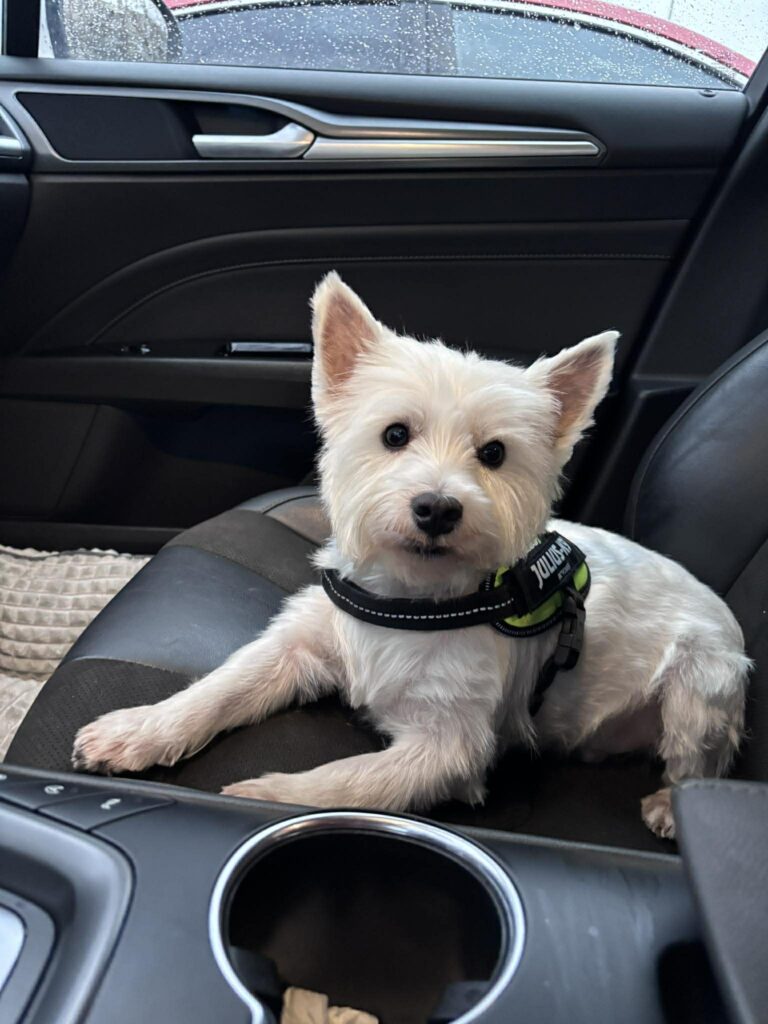
We have some great news about Koko!
He recovered successfully from his liver surgery, which we monitored with regular abdominal ultrasounds. He continued to receive a special diet.
He was neutered in the fall, a procedure made slightly more difficult by the fact that one of his testicles was located in the abdominal cavity. He handled the recovery period very well.
We still had one more task ahead of us, as his teeth were in terrible condition.
Meanwhile, one of our former adopters got in touch; their elderly Westie had recently passed away.
She met Koko, and their life together began.
Koko accompanies Bernadette to work, where she quickly became a favorite.
They go on lots of outings and take walks along the riverbank every evening. Koko loves the water, but doesn’t like to bathe at home. 😆
She has changed a great deal, both physically and emotionally.
In February 2026, we happily signed the official adoption agreement.
Bernadett and Koko love each other very much. ♥️
Thank you all for helping WRH with Koko’s considerable medical expenses and for following his fate!
Üdvözlettel,Pásztor Zoltán
Westie Rescue Hungary
Update October 19, 2026:
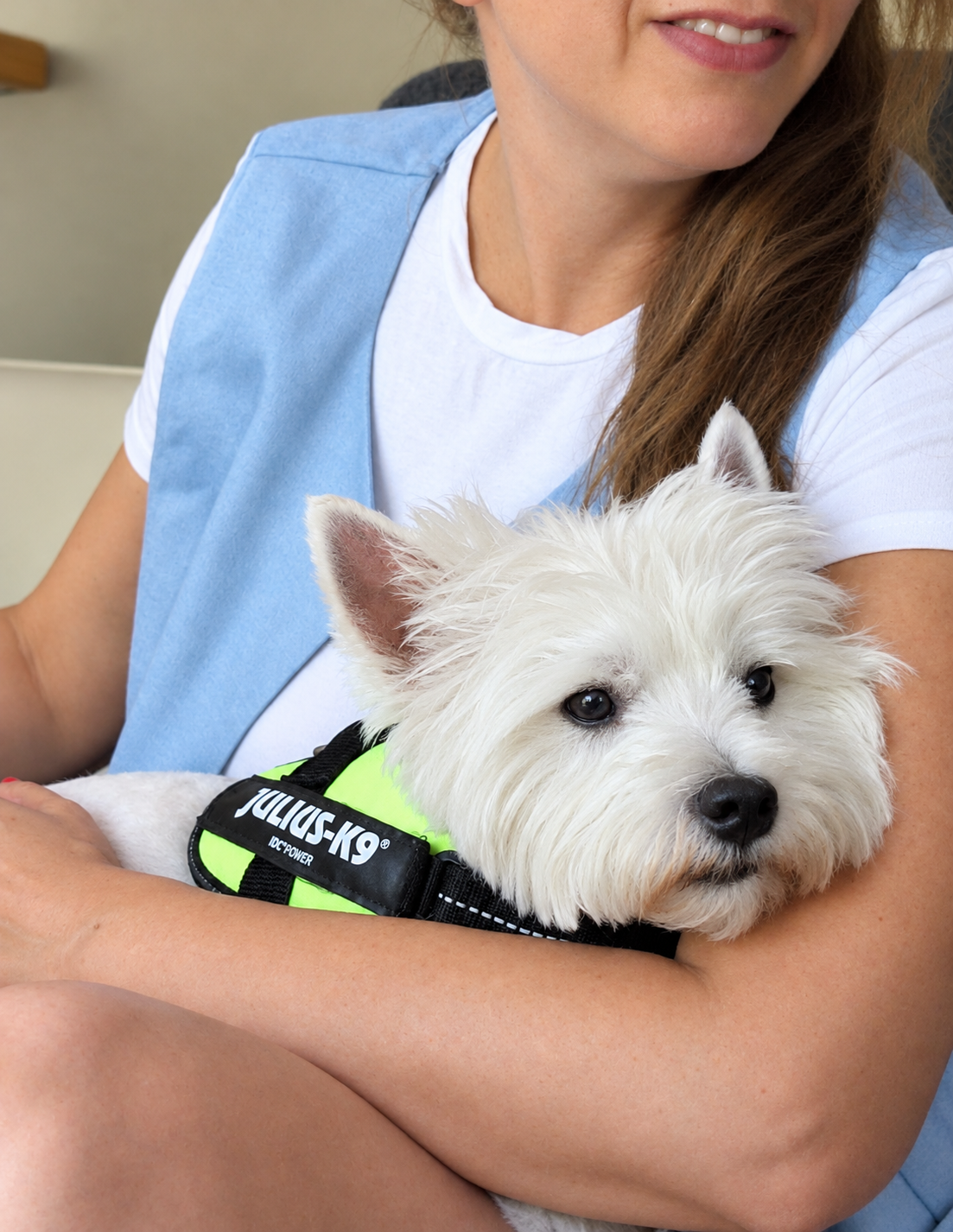
Koko has been living happily with her owner for 8 months.
They came to visit us at the end of the summer.
She’s in great physical shape and has gained some weight. When she first came to us, she weighed only 4 kg!
Koko is sweet and peaceful, and he’s very attached to Bernadett. He was even a little jealous when she petted other dogs. 😆
They travel a lot and go everywhere together—even to work.
They’re planning to add another dog to their family in the future. ♥️
Thank you all for helping WRH with Koko’s considerable medical expenses and for following his fate !
I’m attaching my favorite picture, which I took during their visit.
Üdvözlettel,
Pásztor Zoltán
Westie Rescue Hungary